

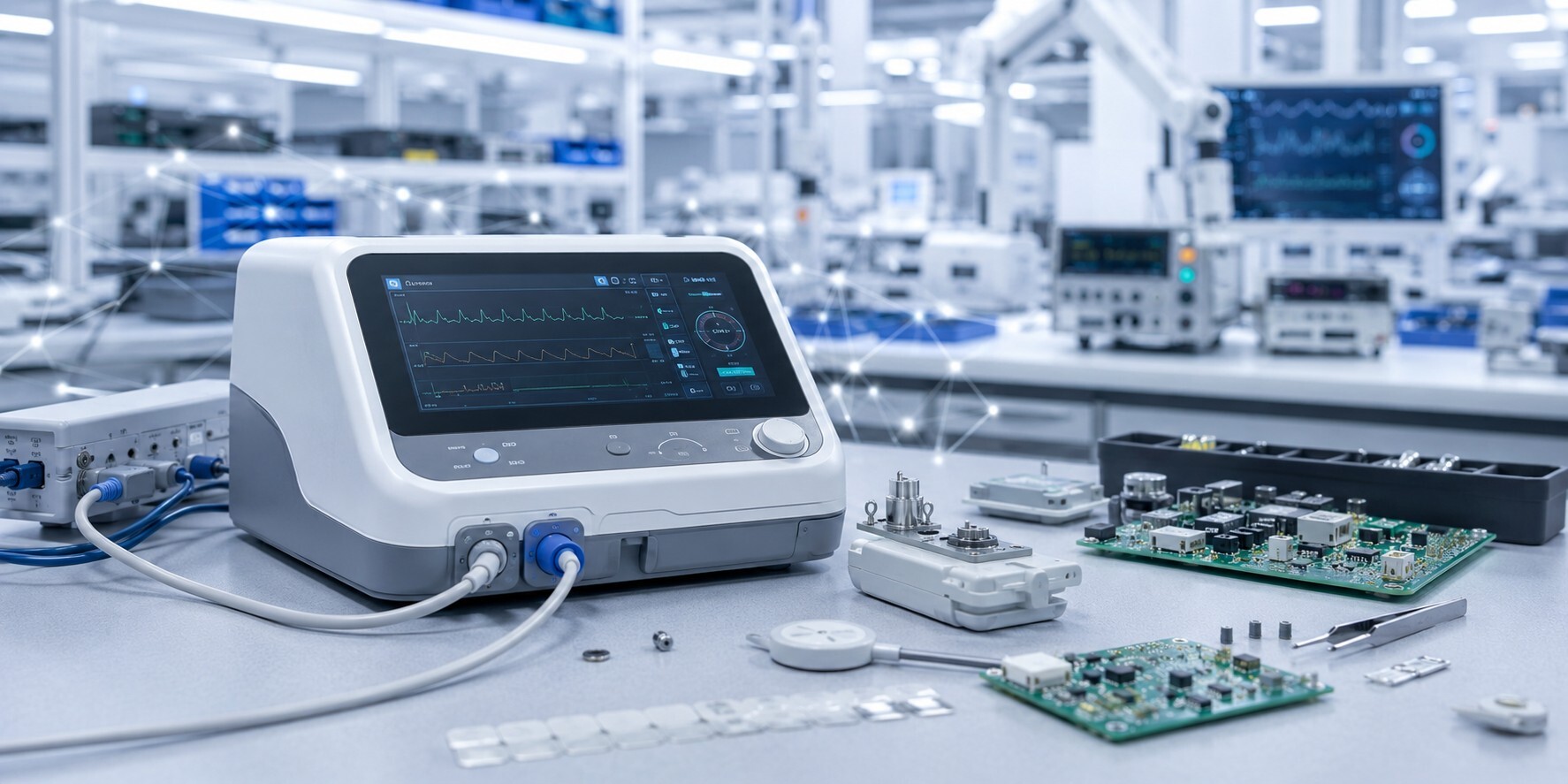
Connected medical devices are changing how care is delivered, monitored, and managed. From remote patient monitoring devices and respiratory equipment to diagnostic systems, wearable-adjacent technologies, therapy devices, and home-use medical equipment, more products now rely on sensors, firmware, wireless communication, data transmission, and software-enabled functionality.
For medical device OEMs, this creates new opportunities. Connected devices can support earlier intervention, better patient engagement, stronger clinical visibility, and more efficient care delivery. But they also introduce new manufacturing challenges.
A connected medical device may include embedded software, firmware, wireless modules, programmed components, calibration requirements, unique device identifiers, configuration controls, cybersecurity considerations, and post-market traceability needs. That means the contract manufacturer must do more than build the device correctly. The manufacturer must help preserve the integrity, consistency, and documentation of the connected system throughout production.
For OEMs evaluating a medical device contract manufacturing partner, the question is no longer just, “Can this supplier assemble our product?” The better question is: “Can this supplier control the manufacturing process for a connected, regulated medical device from component sourcing through final release?”
Manufacturing connected medical devices requires a contract manufacturer that can support controlled assembly, firmware loading, configuration management, device testing, serialization, traceability, labeling, packaging, and quality documentation. Because connected devices may include software, wireless modules, sensors, cloud integration, and patient data pathways, OEMs need a manufacturing partner with strong process controls, documentation discipline, and experience supporting regulated medical device production.
Traditional medical device manufacturing already requires strong quality systems, validated processes, controlled documentation, traceability, and regulatory discipline. Connected medical devices add another layer of complexity because hardware, software, electronics, data, and usability must function together as one controlled system.
A connected device may require:
Each of these steps must be repeatable, documented, and controlled. A small inconsistency in firmware version, device configuration, sensor calibration, connector placement, or test procedure can affect device performance or create downstream quality issues.
This is why connected medical device OEMs need a contract manufacturer with experience in both electromechanical assembly and regulated medical device production. The manufacturer must understand that product quality is not limited to the physical build. It also depends on the controlled interaction between hardware, software, data capture, and device performance.
For connected medical devices, firmware and software control is a critical manufacturing consideration. A device may be physically assembled correctly but still fail to meet requirements if the wrong firmware version is loaded, the wrong configuration is applied, or the production record does not clearly document what was installed.
OEMs should look for a contract manufacturer that can support controlled firmware and software-related production steps, including:
This is especially important for devices that may evolve over time through software updates, cybersecurity patches, feature changes, or regional market requirements. Without disciplined controls, it becomes difficult to know which version of a product was manufactured, released, shipped, or later serviced.
A strong manufacturing partner should be able to support the OEM’s defined requirements while maintaining clear records that connect the physical device to the software or firmware state at the time of production.
Connected devices must be tested as connected systems. Basic electrical testing may not be enough.
Depending on the product, a contract manufacturer may need to support testing for:
The exact testing requirements should be defined by the OEM, but the manufacturing partner must be able to execute those requirements consistently and document the results.
For many connected medical devices, final testing may need to confirm not only that the device turns on, but that it communicates, records, transmits, responds, and performs as intended. This requires properly controlled test fixtures, trained operators, clear acceptance criteria, and documented test data.
When evaluating a contract manufacturer, OEMs should ask whether the supplier can support both physical production and system-level verification. The closer testing reflects the real-world use environment, the better positioned the OEM is to identify issues before devices reach patients, clinicians, or distribution partners.
Traceability is important for any medical device, but it becomes even more valuable when the device includes electronic components, sensors, programmed modules, wireless functionality, and serialized configurations.
A connected medical device manufacturing process may need to trace:
This level of traceability supports quality investigations, complaint handling, post-market surveillance, recall management, field corrections, and ongoing production improvement.
For OEMs, the ability to trace what was built, when it was built, how it was configured, which components were used, and which tests were passed is essential. It provides the documentation foundation needed to support quality management, regulatory expectations, and customer confidence.
A contract manufacturer should have processes in place to maintain accurate records and connect each finished device to the appropriate production documentation.
Cybersecurity is often viewed as a design or software issue. But for connected medical devices, manufacturing can also play an important role in supporting cybersecurity-related controls.
The contract manufacturer may not be responsible for the OEM’s cybersecurity strategy, threat modeling, software architecture, or regulatory submission. However, the manufacturing process may involve steps that affect cybersecurity control, including:
As cybersecurity expectations continue to increase, OEMs need manufacturing partners that understand the importance of controlled, documented production workflows. A weak manufacturing process can undermine even a strong device design if firmware, configuration, or device identity is not handled properly.
Connected medical device manufacturing should therefore include clear procedures around who can access files, how software is loaded, how configurations are verified, and how records are maintained.
Connected medical devices often rely on specialized electronic components, sensors, batteries, wireless modules, displays, cables, plastics, and packaging materials. Many of these components can affect device performance, regulatory documentation, availability, and lifecycle management.
OEMs should look for a manufacturing partner that can support supplier controls and component management, including:
This is especially important for electronic components, where availability, lifecycle status, and substitutions can create significant risk. A component change that seems minor from a procurement standpoint may require engineering review, quality review, validation, or regulatory assessment.
A contract manufacturer with strong supply chain discipline can help OEMs avoid production disruptions while maintaining the control required for regulated medical devices.
For connected medical devices, documentation is not a back-office formality. It is part of the product’s quality infrastructure.
A qualified contract manufacturer should be able to support documentation such as:
This documentation gives OEMs visibility into how each device was manufactured and whether it met defined requirements before release.
Strong documentation is also essential during audits, quality investigations, supplier reviews, and regulatory inspections. For connected devices, documentation may need to show not only that the product was assembled properly, but also that firmware, testing, configuration, labeling, and serialization were controlled.
Many connected medical devices are designed for use outside traditional clinical settings. Devices used in the home must be manufactured with added attention to durability, usability, packaging, labeling, and patient handling.
Home-use connected devices may need to account for:
This has implications for manufacturing and final inspection. The device must be built not only to meet technical specifications, but also to perform reliably in the hands of patients, caregivers, and clinicians across a range of real-world environments.
For OEMs developing remote monitoring, respiratory, diagnostic, or therapy-related devices, a contract manufacturer with experience in home-use medical device production can provide valuable support during scale-up.
Connected medical devices often move through multiple phases: prototype, pilot build, verification and validation support, initial production, and full-scale manufacturing. Each phase requires discipline, but the risks change as volume increases.
During scale-up, OEMs need to maintain control over:
A manufacturer that performs well during a small pilot run may not necessarily have the systems required for consistent volume production. OEMs should evaluate whether the contract manufacturer can scale while preserving quality controls, traceability, and documentation integrity.
The goal is not just to build more devices. The goal is to build more devices the same controlled way, with repeatable quality and clear records.
Before selecting a contract manufacturing partner, OEMs should ask targeted questions such as:
The answers to these questions can help OEMs determine whether a supplier is simply an assembler or a true medical device manufacturing partner.
Need a manufacturing partner for a connected medical device?
Sanbor Medical supports OEMs with controlled production, documentation, traceability, electronic assembly, and scalable medical device manufacturing. Contact our team to discuss your project.
Sanbor Medical supports OEMs with medical device contract manufacturing services for connected, electromechanical, and regulated medical devices. With experience across electronic assembly, cable and wire harness integration, product box builds, quality documentation, and ISO 13485 manufacturing environments, Sanbor Medical helps OEMs move from production planning to controlled manufacturing.
Our team supports medical device OEMs that need a manufacturing partner capable of managing complex assemblies, controlled documentation, traceability, and scalable production. Whether the device includes sensors, electronics, firmware-controlled functionality, connectivity modules, or home-use requirements, Sanbor Medical provides the manufacturing discipline needed to help bring regulated products to market with confidence.
Connected medical devices create new opportunities for OEMs, clinicians, and patients. But they also raise the bar for manufacturing.
A successful connected medical device manufacturing program requires more than assembly capacity. It requires controlled firmware processes, functional testing, component traceability, cybersecurity-aware workflows, supplier discipline, documentation, and scalable quality systems.
For OEMs developing connected medical devices, the right contract manufacturer can help reduce production risk, support regulatory readiness, and maintain product consistency from pilot builds through full-scale manufacturing.
Looking for a medical device contract manufacturing partner for a connected or electromechanical device? Contact Sanbor Medical to discuss your production goals, quality requirements, and scale-up needs.
A connected medical device is a medical device that uses electronic communication, software, firmware, sensors, wireless modules, or data transmission capabilities to collect, process, send, or receive information. Examples may include remote monitoring devices, diagnostic equipment, respiratory devices, therapy systems, and home-use medical devices.
Connected medical devices are more complex because the manufacturing process may need to control hardware, firmware, software versions, wireless modules, device configuration, serialization, testing, labeling, cybersecurity-related controls, and traceability. The device must be built and documented as a complete system.
OEMs should look for a contract manufacturer with medical device manufacturing experience, ISO 13485 quality systems, electromechanical assembly capabilities, firmware control processes, functional testing capability, traceability systems, supplier management discipline, and strong documentation practices.
Cybersecurity affects manufacturing when the production process involves firmware loading, device provisioning, configuration control, credential handling, software version documentation, secure file access, or device identity management. These steps should be controlled and documented to support the OEM’s cybersecurity and quality requirements.
Traceability helps OEMs connect each finished device to its components, firmware version, configuration, test results, serial number, production records, and release documentation. This supports quality investigations, complaint handling, post-market surveillance, recalls, and regulatory audits.
